Irish Heart Attack Audit National Report 2025

Irish Heart Attack Audit National Report 2025 Image

The Irish Heart Attack Audit National Report 2025 provides a national overview of the care delivered to 1,642 patients with ST-elevation myocardial infarction (STEMI), a serious type of heart attack, across Ireland's 10 percutaneous coronary intervention (PCI) centres during 2025.

Drawing on data from participating PCI centres and referring hospitals, the report examines access to treatment, the timeliness of care and patient outcomes. It enables hospitals to compare their performance, identify variation and target areas for quality improvement.

The report highlights continued high rates of treatment to restore blood flow to the heart, with 95% of eligible patients receiving reperfusion therapy. However, only 59% received treatment within recommended timeframes, highlighting the need to address delays across the patient care pathway.


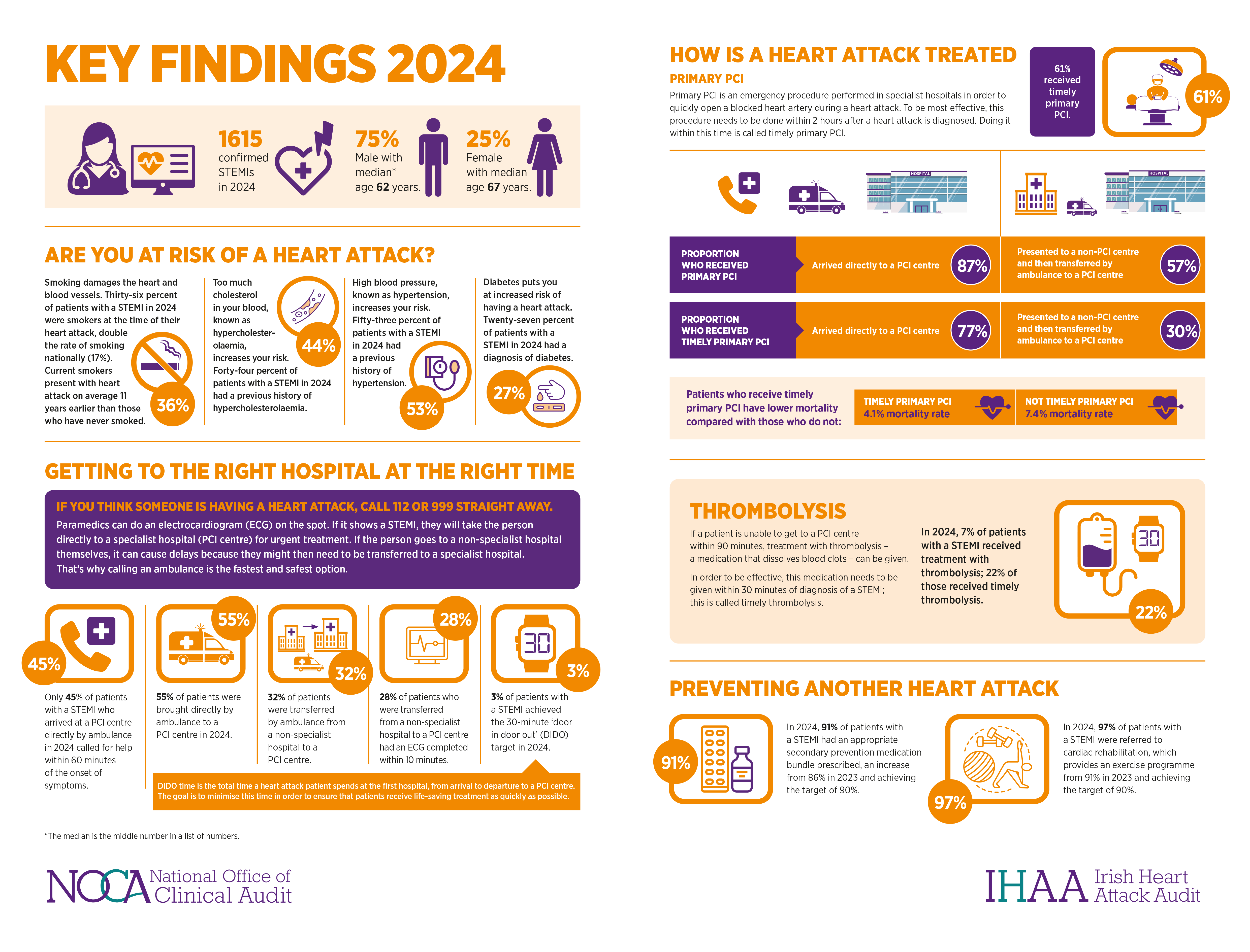
Key Findings

The key findings from the 2025 report highlight important areas for improvement in heart attack care in Ireland. Of the 1,642 patients recorded, 87% had at least one cardiovascular risk factor, while only 48% of patients brought directly to a specialist centre by ambulance called for help within an hour of symptom onset. Patients who received timely primary PCI had lower in-hospital mortality rates (4.2%) compared with those whose treatment was delayed (9.2%). Encouragingly, 98% of eligible patients were referred for cardiac rehabilitation. The findings highlight the importance of prevention, early recognition of symptoms, timely treatment and ongoing care following a heart attack.

Key Recommendations

Recommendation 1

Increase the proportion of patients with a STEMI receiving primary PCI by implementing a national, targeted public awareness campaign that encourages individuals to seek immediate medical attention when experiencing symptoms of a heart attack.

Recommendation 2

Improve the timeliness of primary PCI in patients with a STEMI where primary PCI is identified as the optimal reperfusion therapy.

Recommendation 3

Improve the timeliness of thrombolysis in patients with a STEMI where thrombolysis is identified as the optimal reperfusion therapy.

Recommendation 4

NOCA should collaborate with the National Ambulance Service (NAS) and Dublin Fire Brigade (DFB) to develop and implement a standardised national reporting framework for pre-hospital STEMI care.